J. M. W. Turner
What the Light Consumed
Turner started where most painters are content to finish. In his early work, the buildings are solid, the coastlines exact, the stone rendered with the patience of someone who believes that careful looking is enough.
It wasn't enough for him. Not for long.
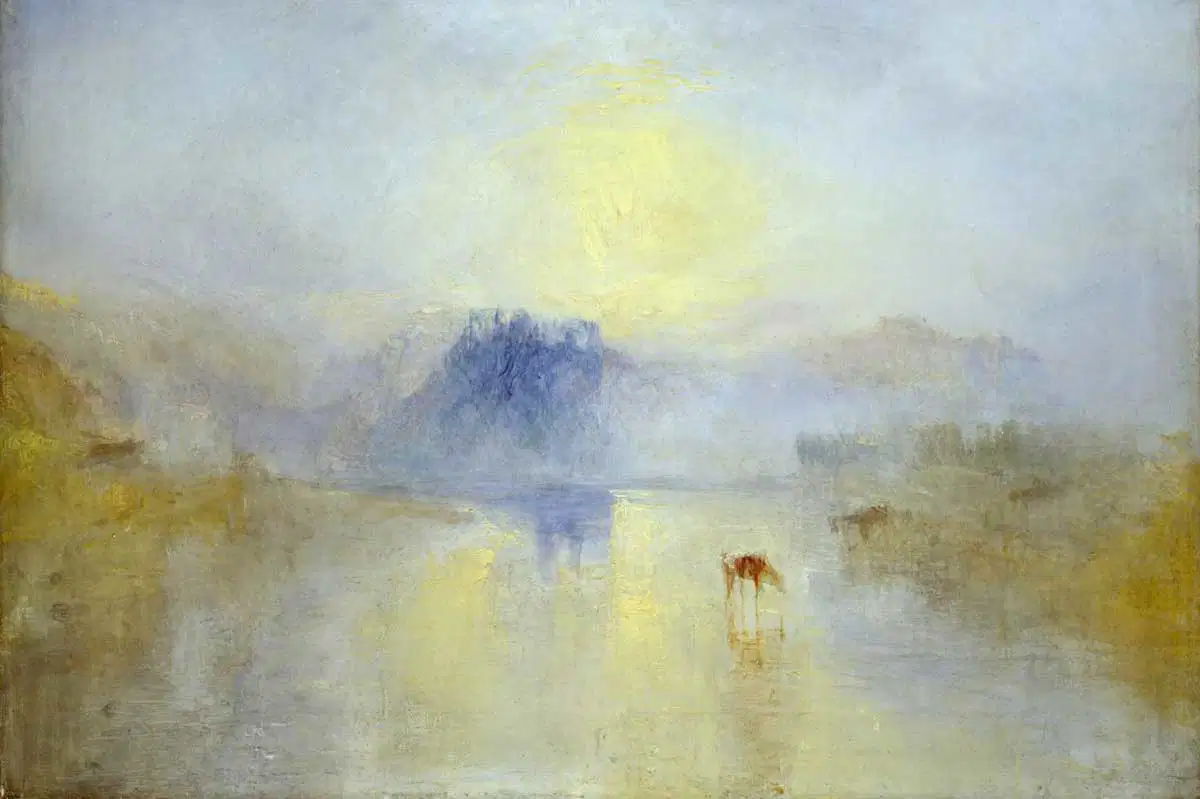
Something shifted. The structures are still there — castles, harbours, the open sea — but they begin to lose their edges. Light stops being something that falls on objects and starts being the subject itself. Steam, mist, and the particular violence of morning sun on water. The world doesn't disappear in his later work. It dissolves.
His critics called it soapsuds and whitewash. They thought he had lost something. What he had actually done was decide that painting the castle mattered less than painting the light that was consuming it.
Look at Norham Castle at sunrise. He had painted that fortress before — solidly, carefully, in his youth. In this version, the stone is barely there. It bleeds into the sky, into the river beneath it. The boundaries between earth, air, and water are gone. What remains is atmosphere. Feeling. The blinding fact of early light.
Long before the Impressionists were working, Turner had understood something they would later arrive at independently — that the eye doesn't read the world as hard outlines and fixed surfaces. It reads light. Energy. The constant movement of one thing into another.
In letting the form dissolve, he got closer to the truth of what seeing actually is.